Hilltop Park Visual Dating Guide
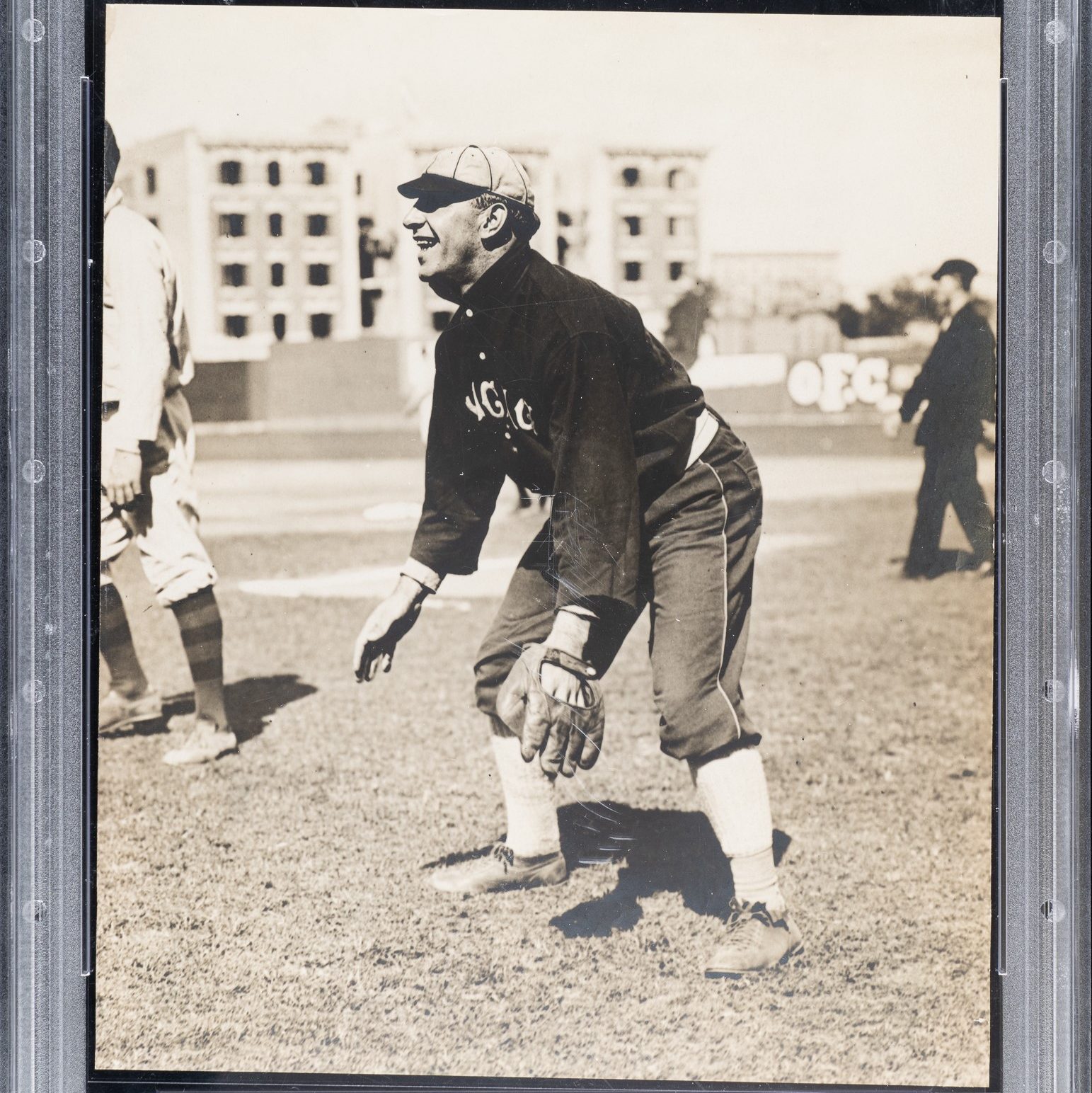
This is a visual guide to the construction details, buildings and advertisements at Hilltop Park.
The following visual guide is constructed from excerpts taken from research conducted on other photographs. Please test your photos against it, and if a conflict results, please let me know using the “Contact” page. Additionally, if you have images of pre-1908 Hilltop Park, please forward those as this resource is a work-in-progress and is meant to be built-upon, with the contributions and help of the baseball enthusiast and research community.
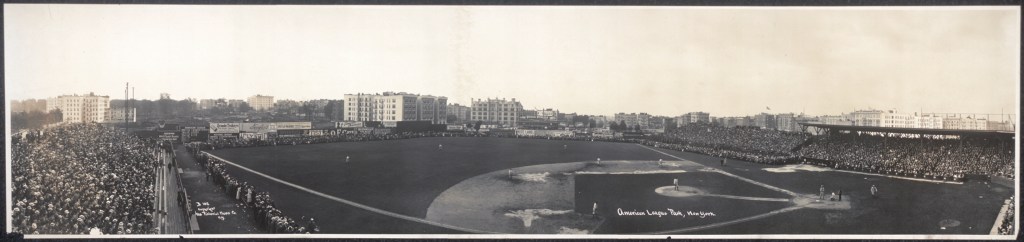
When investigating the content of a photograph, there are times that traditional photographic content dating details cannot be pinned down, whether a uniform year is indiscernible or not absolute, or the frame of the photograph limits the available details that can be analyzed. Regardless, we are limited by the artifacts that we study and therefore must make do with the details and data that are available.
The years indicated are entirely based on a photographic narrative style, meaning a relevant image is found cross-referenced with known player facts and background details to determine a year or year span, set aside, another image is examined in the same fashion, and so on, until a pattern is created. The pattern is then tested against additional relevant photos to either confirm the dates or adjust the dates to fit the photographic data, based on the new photographic info. This methodology, although labor intensive, constructs a very reliable timeline, as it is based on multiple data points that are cross-checked by one another.
The most recognizable feature of Hilltop Park- the set of 3 buildings that still exist today; But they weren’t always there, and the construction project was completed over 2 years, in 2 phases. Read on to learn more.
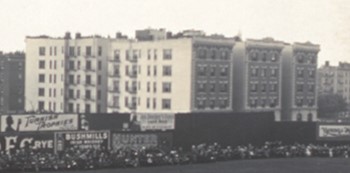
The 3 buildings at Hilltop Park construction progress.
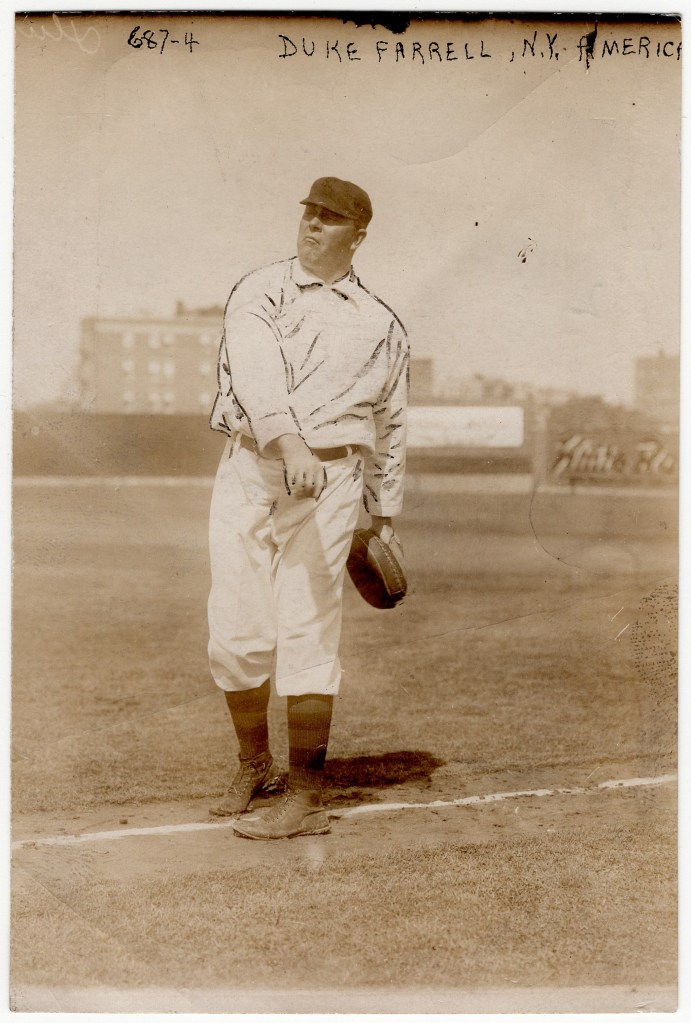
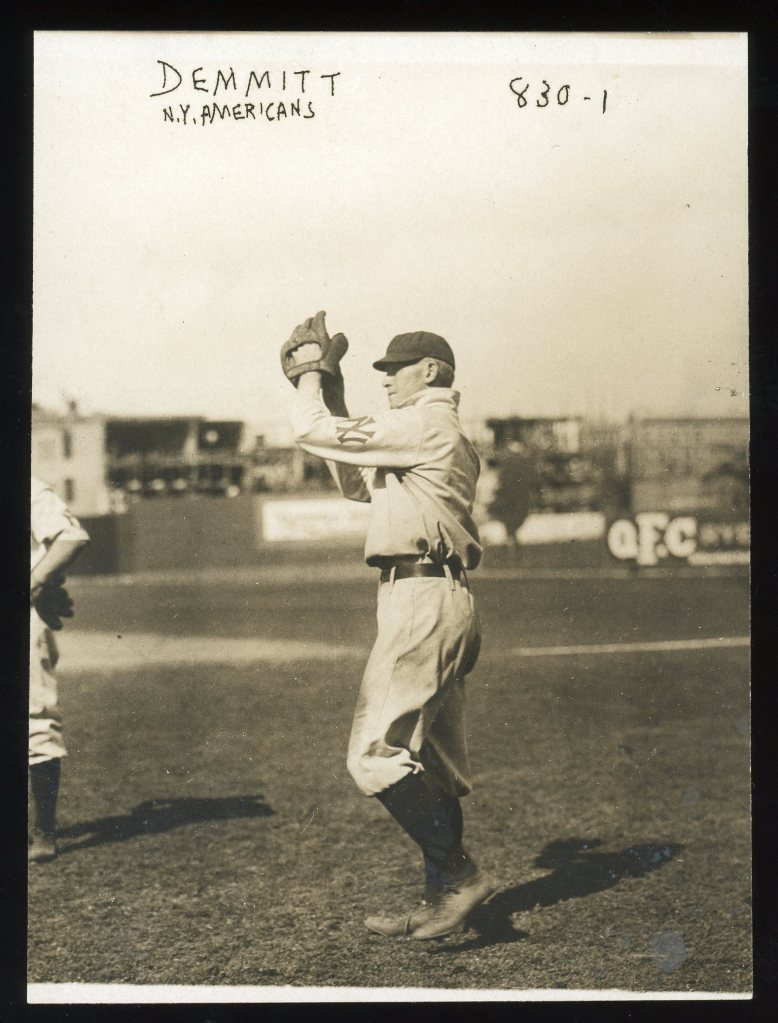

Below a summary of the research establishing when the 3 buildings were initially constructed and how long the construction project took.
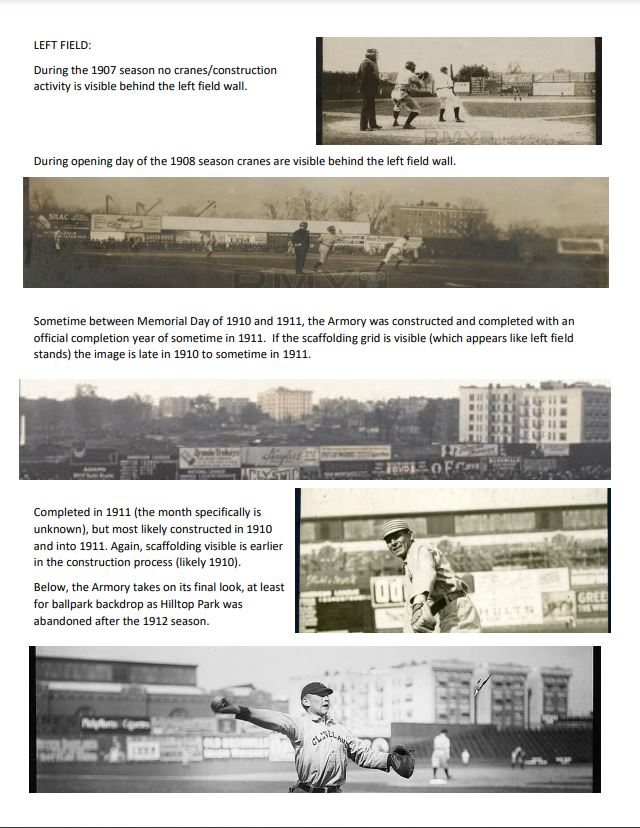
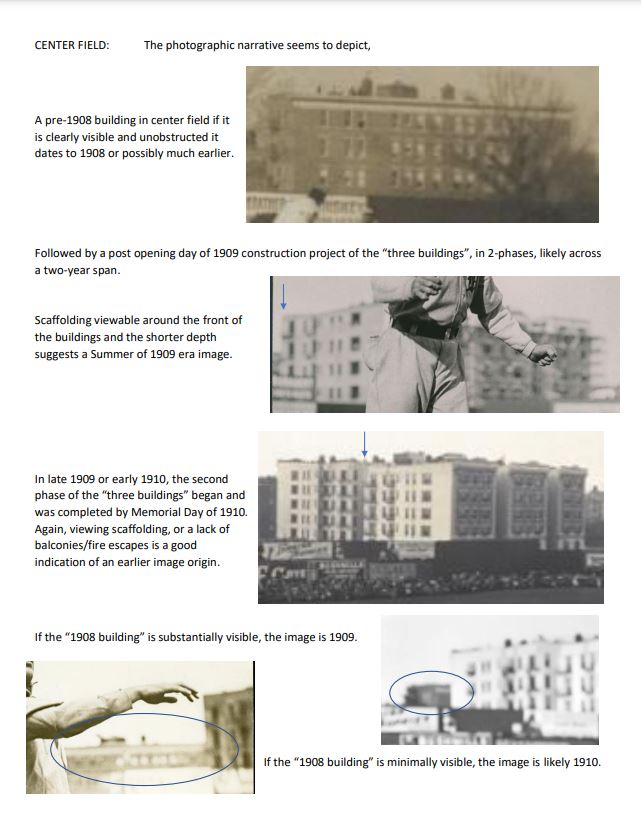
Differentiating Right-Center from 1908 and 1909
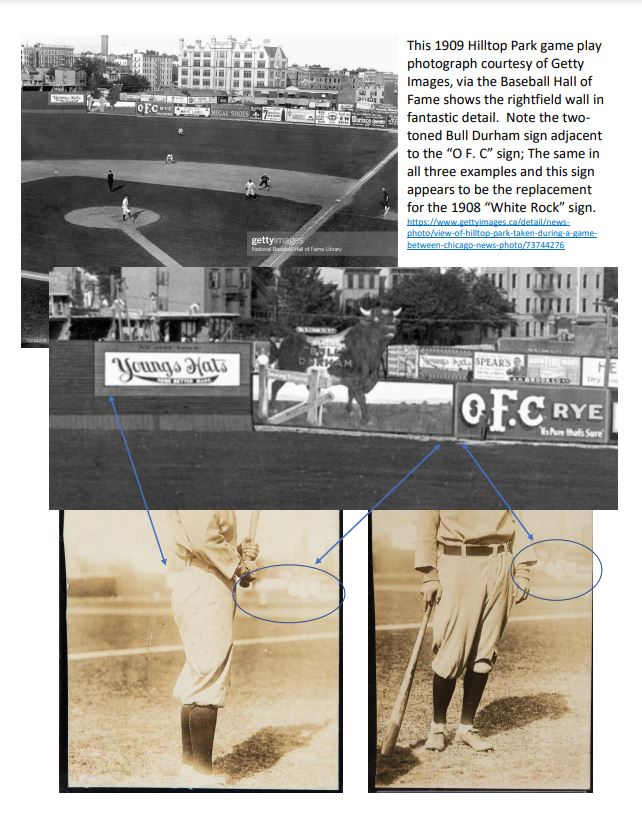
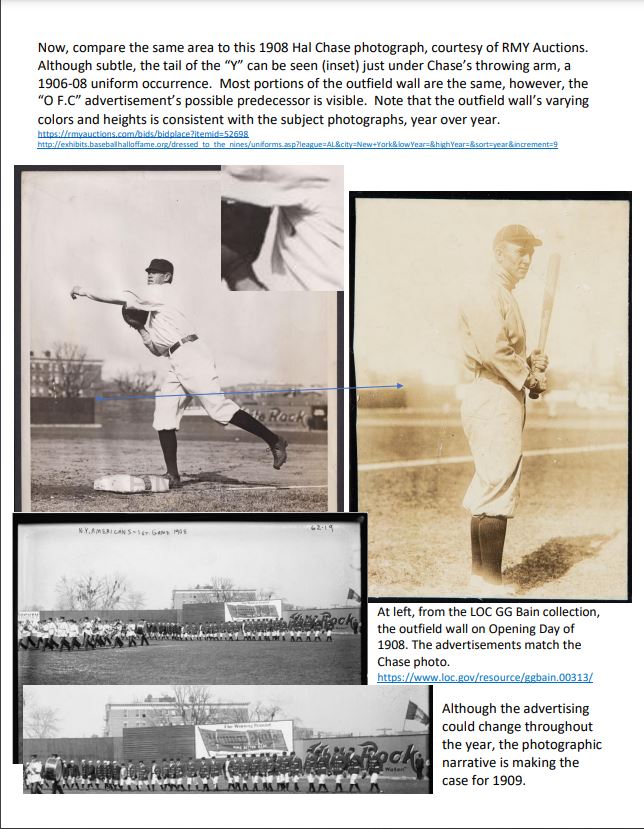

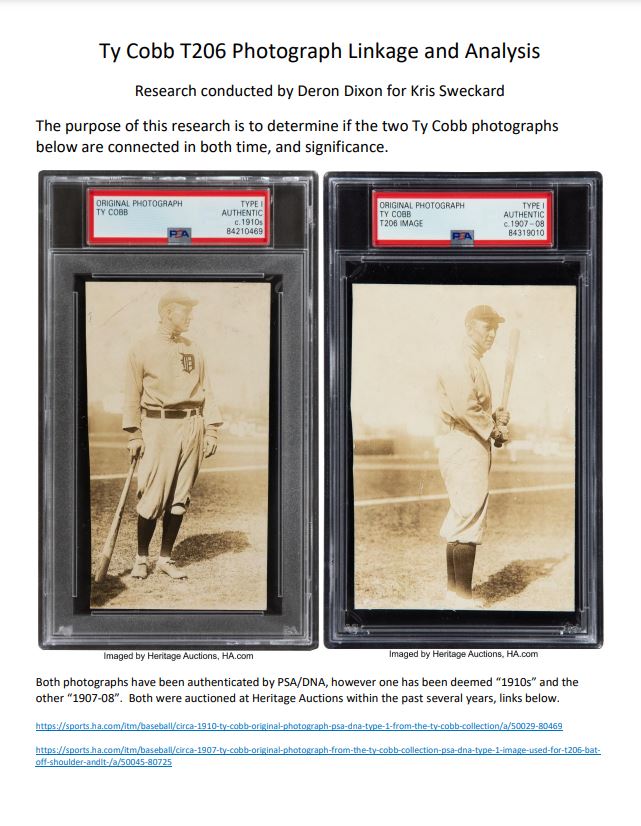
Pre-1908 Hilltop Park Outfield Images

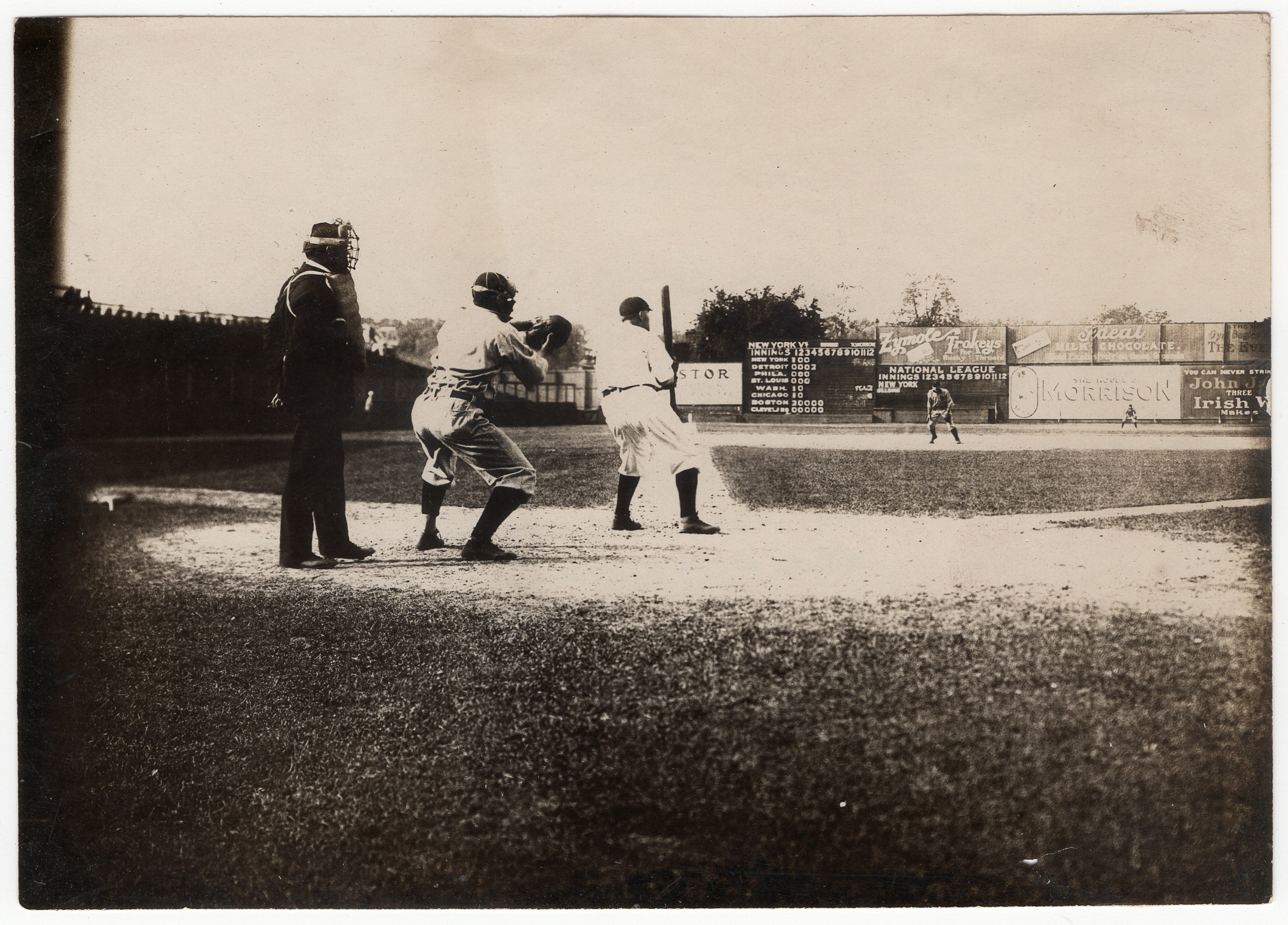
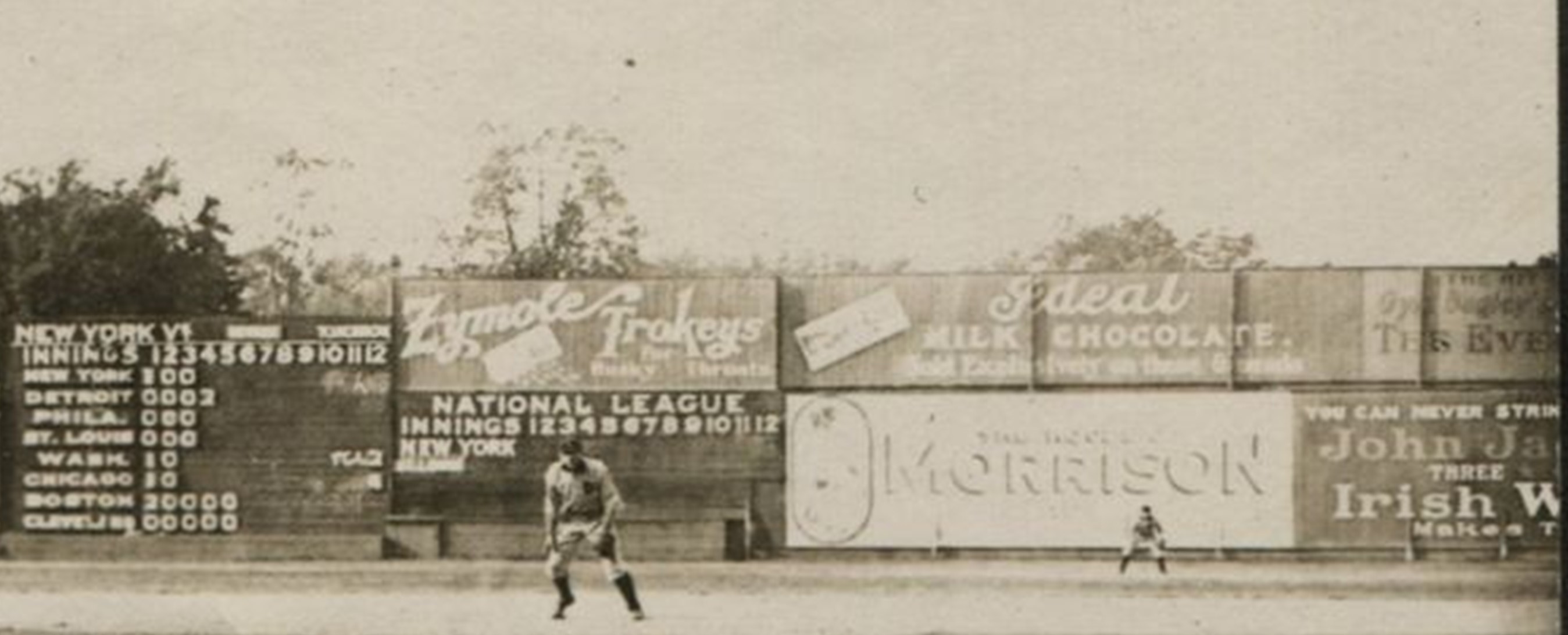
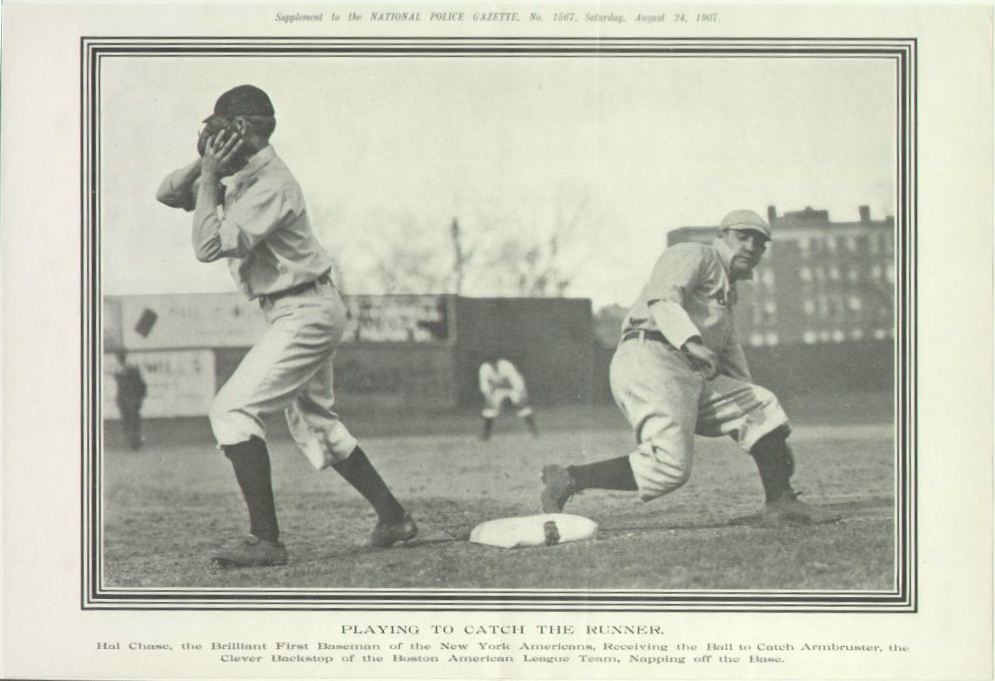
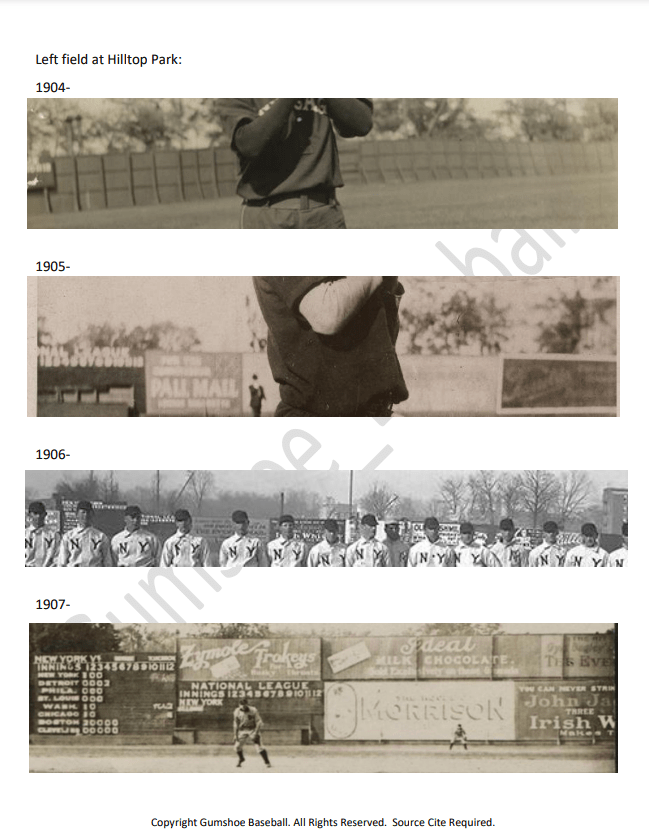
Compare the above 1907 images to the images below. Note the “double-decker” advertising on the outfield wall.
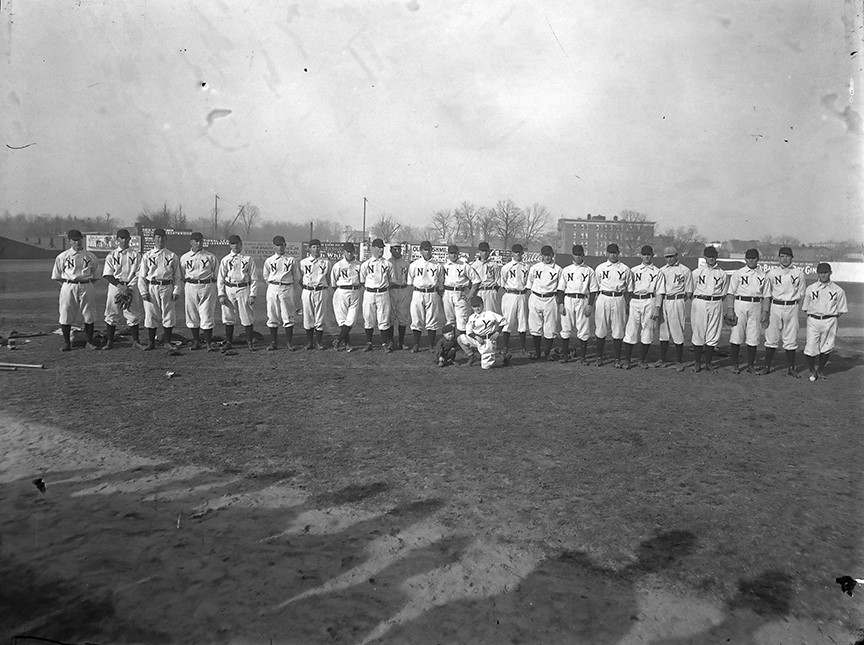
1906 Hilltop Park Center-Right Field
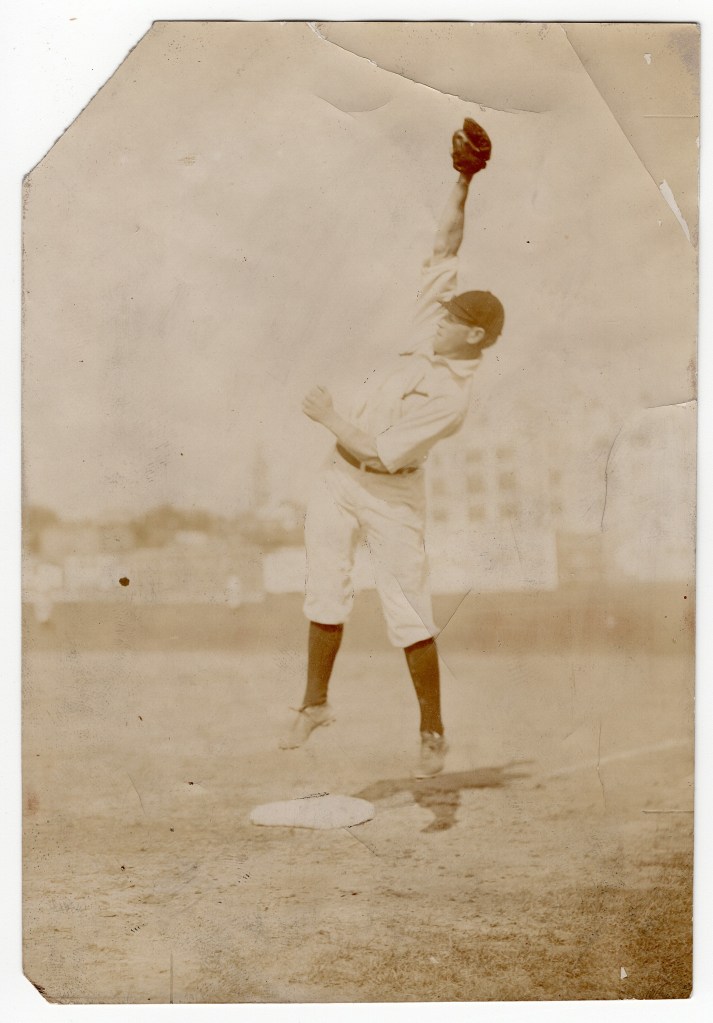
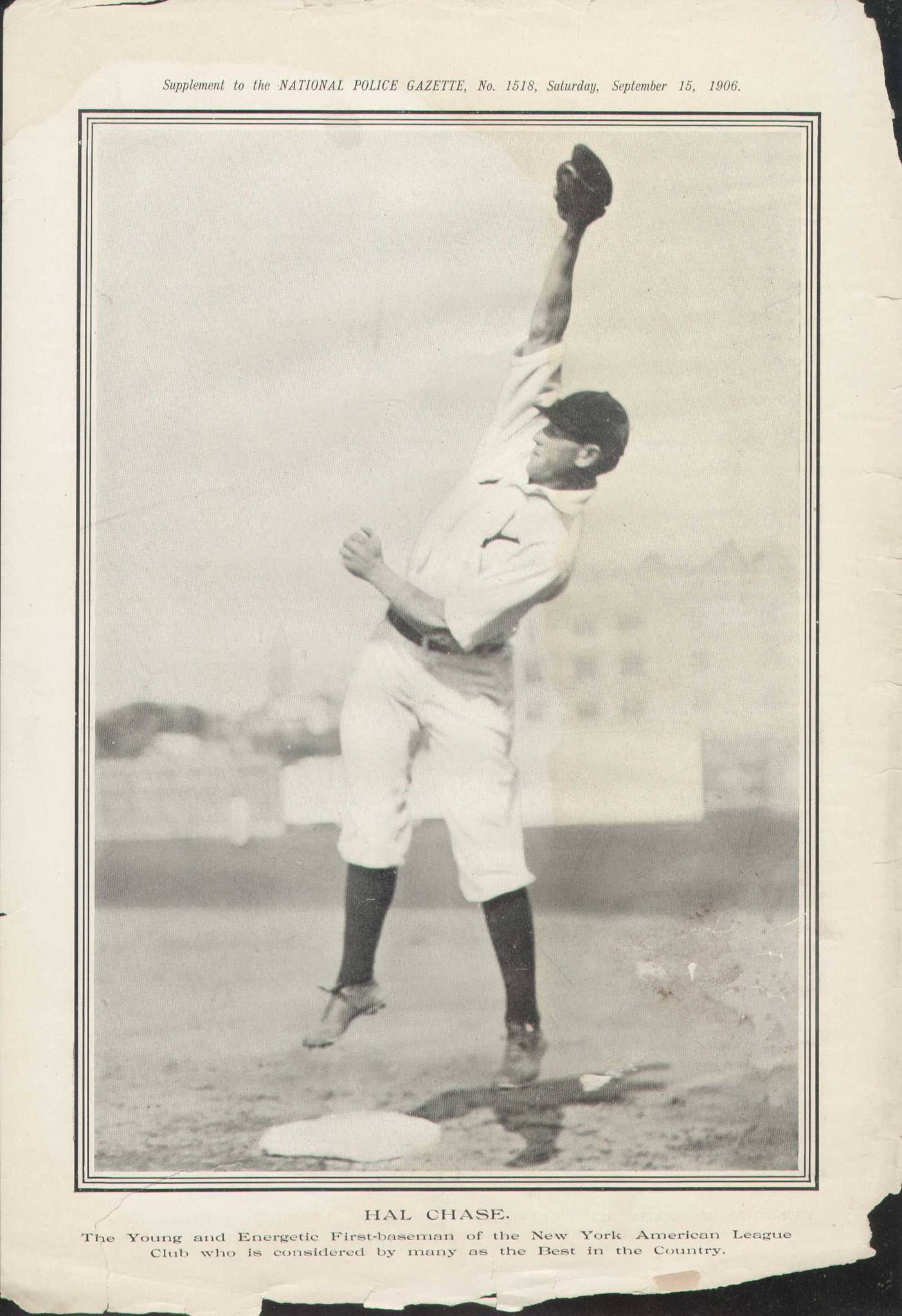

1905 Hilltop Park Outfield Wall
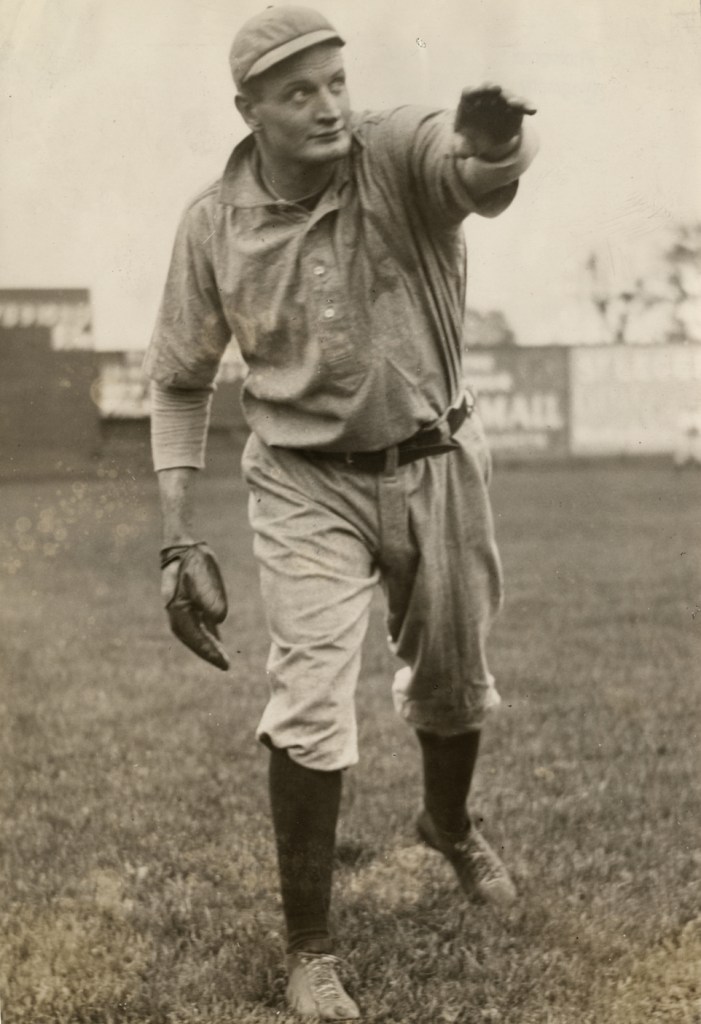
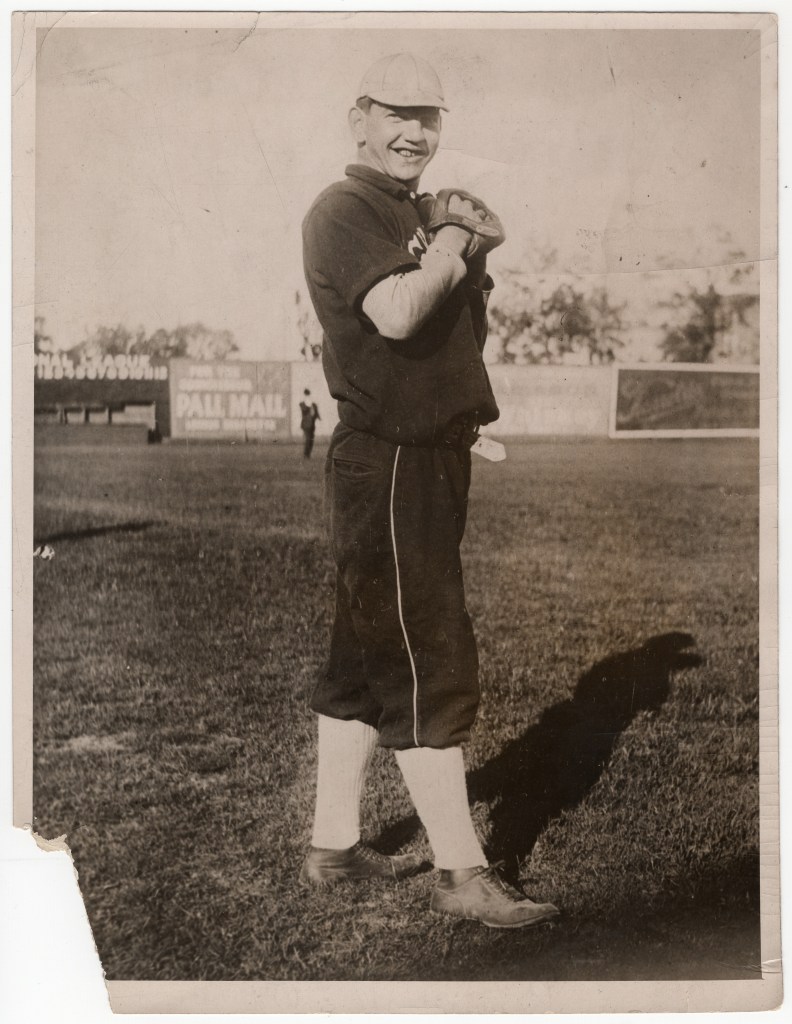
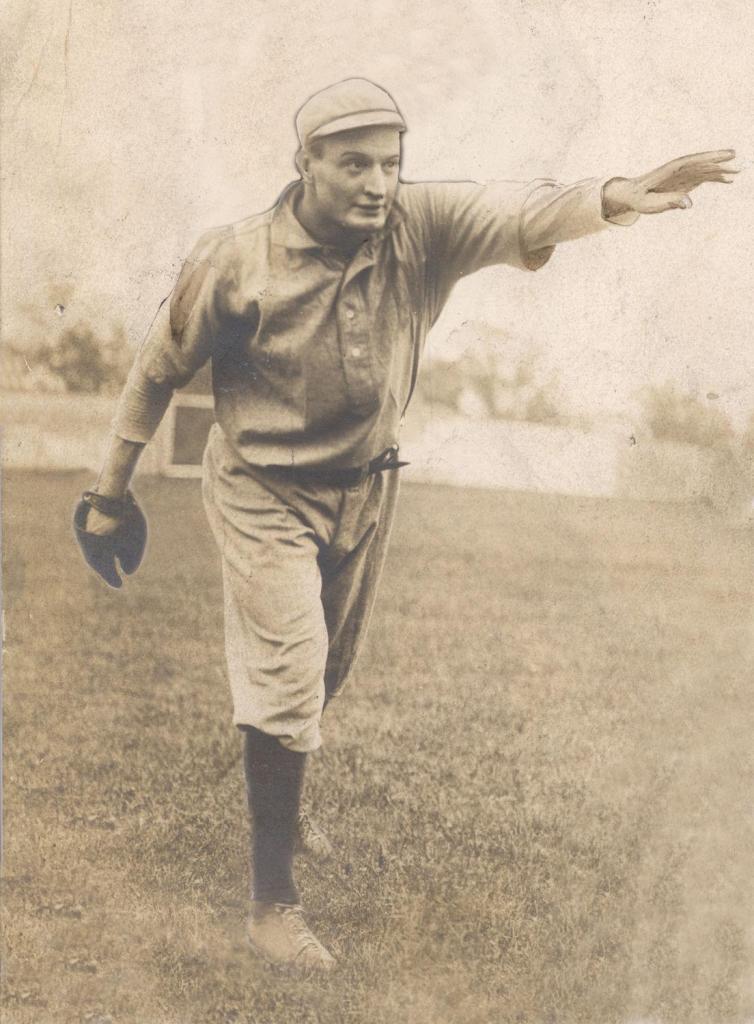

Compare the outfield wall in the above Altrock photograph to the next section of confirmed 1904 images. 1905 appears to be the first season at Hilltop Park with advertisements adorning the left field outfield wall , beginning at far left field next to the National League scoreboard (visible in several of the 1904 images).
1904 Hilltop Park Outfield Wall
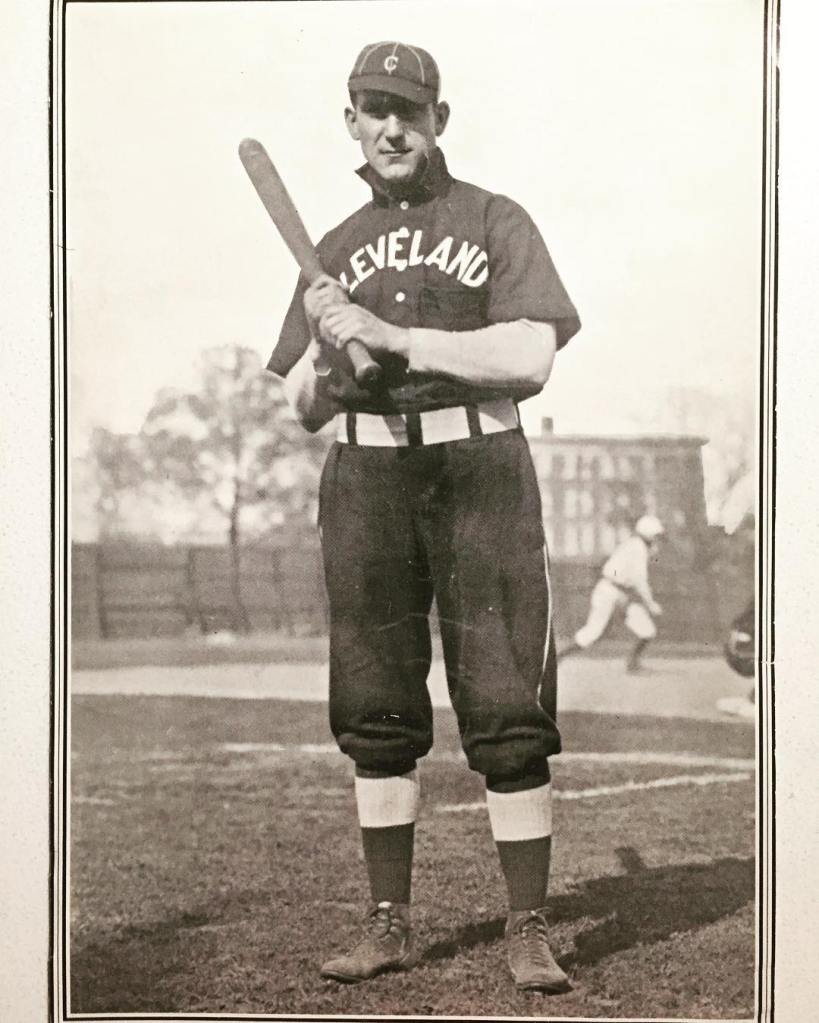
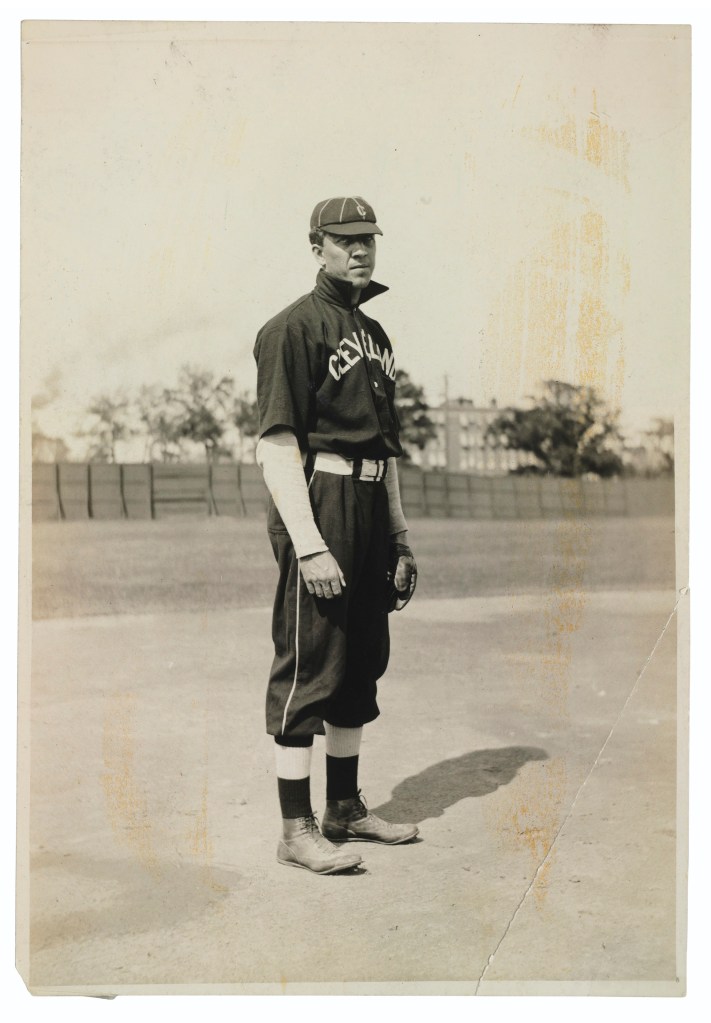

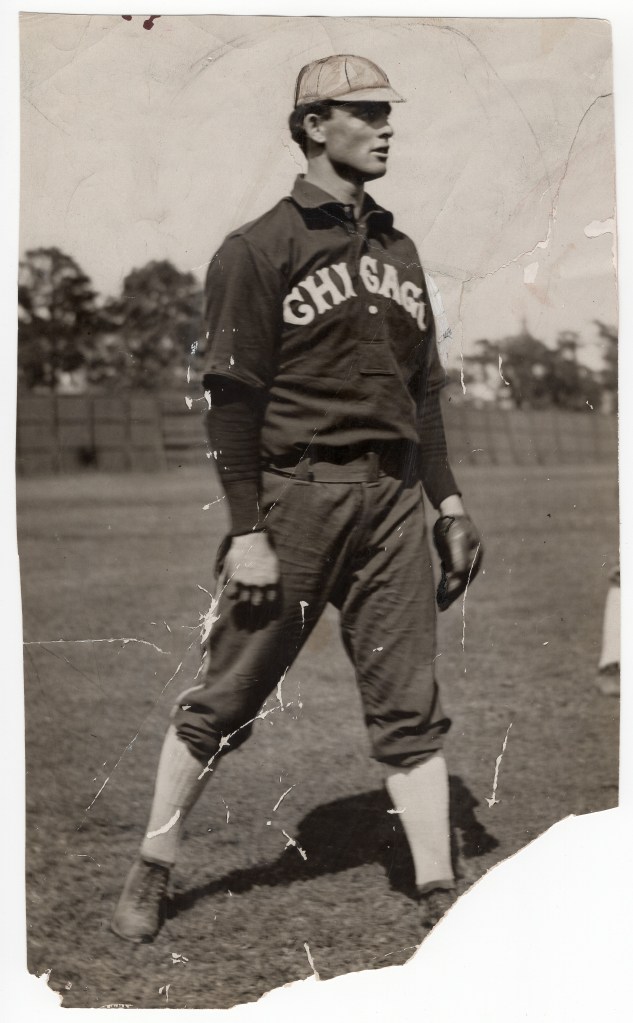
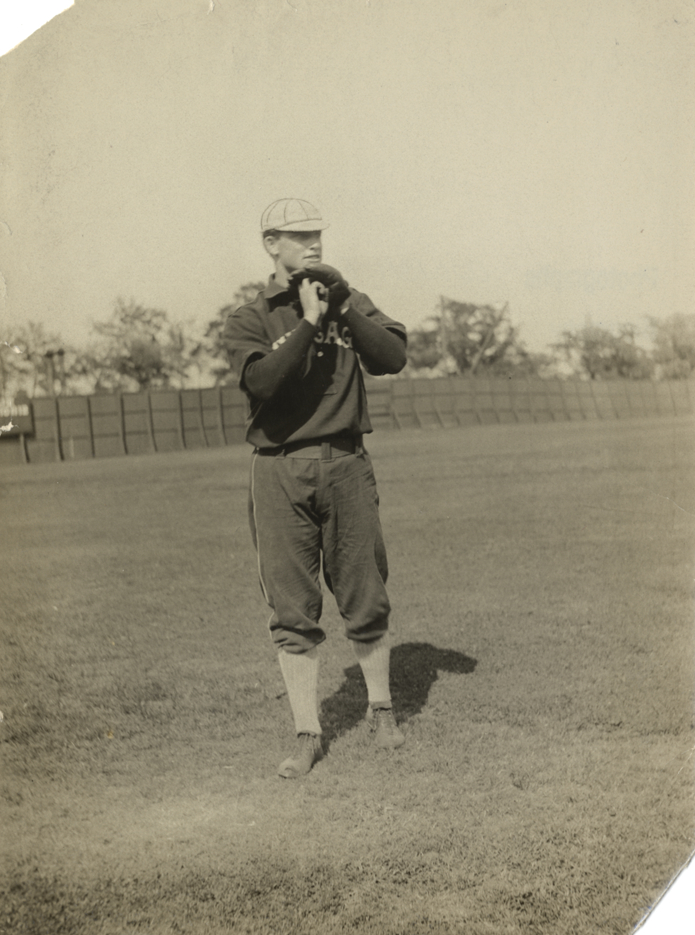

The above images (M128 Police Gazette Nap Lajoie) and Addie Joss (courtesy of Christie’s Auction House), are both Charles Conlon images, taken at Hilltop Park in 1904, as the familiar white stripe atop the building in the back is visible in most, if not all photos. Likewise, the other images in the group (courtesy of the Detroit Public Library) are Conlon images, taken in 1904 at Hilltop Park. When viewed together, they convey the expanse and undeveloped surroundings of a newer ballpark. This pre-advertisement expansive wall appears more like a property wall, rather than a ballpark fence, as it appears to be straight, with no curve towards right field, save for the final image of Earl Moore. Note the angle of the wall in front of the building, compared to the same location in the Lajoie M128 and Joss images. This suggests some mid-season changes to the outfield wall in 1904. It is also possible that the Moore photo is from pre-season of 1905.
Summary of Left Field wall features- 1904-07
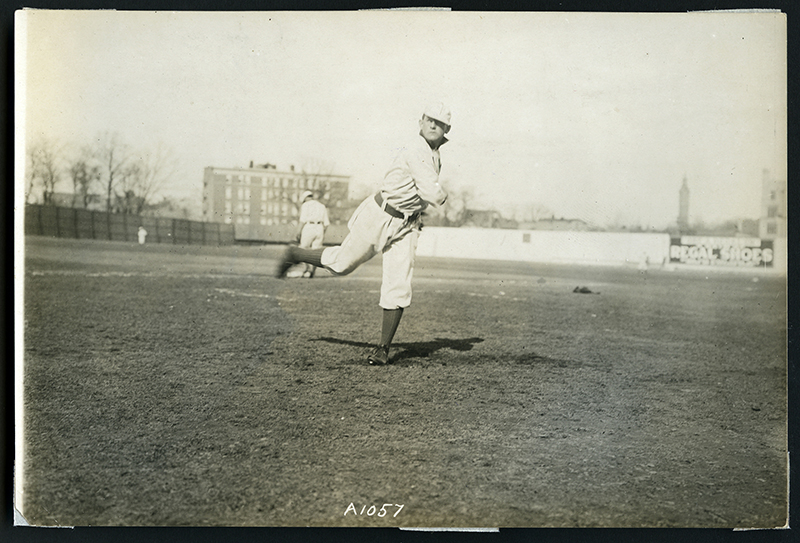
An expansive view of Hilltop Park, behind Jack Chesbro (courtesy of Hunt Auctions), shows the rarely seen Center Field area, in 1903 or 1904.
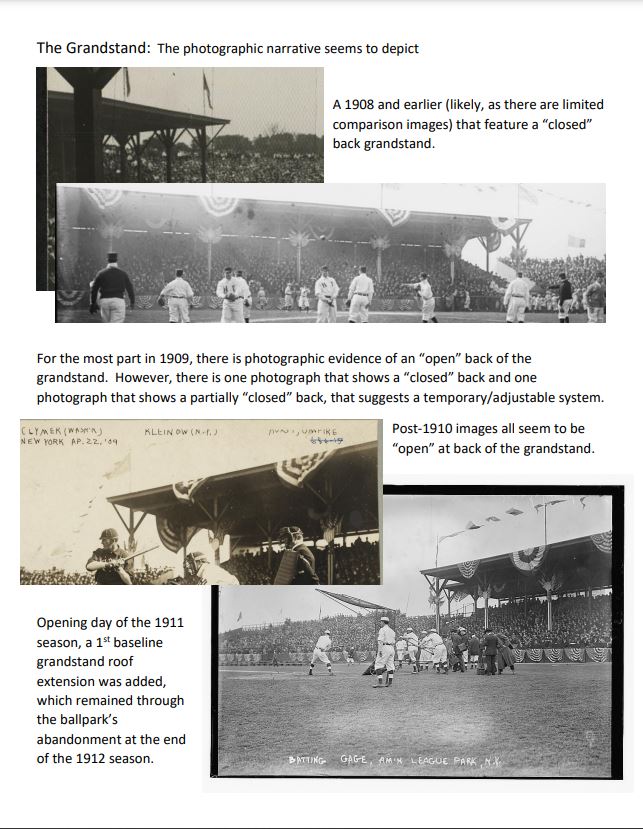
The Grandstand

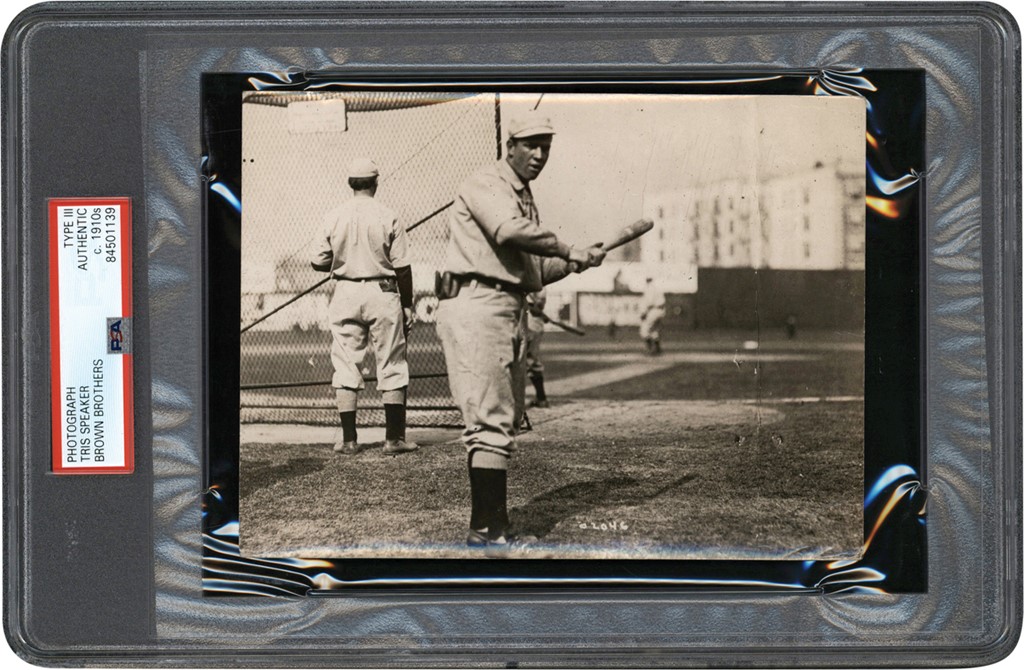
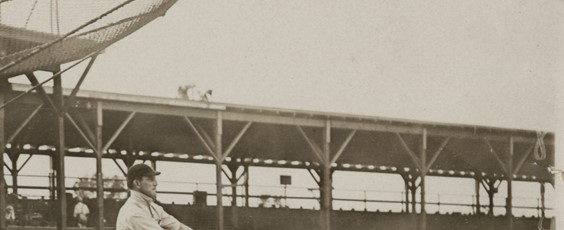
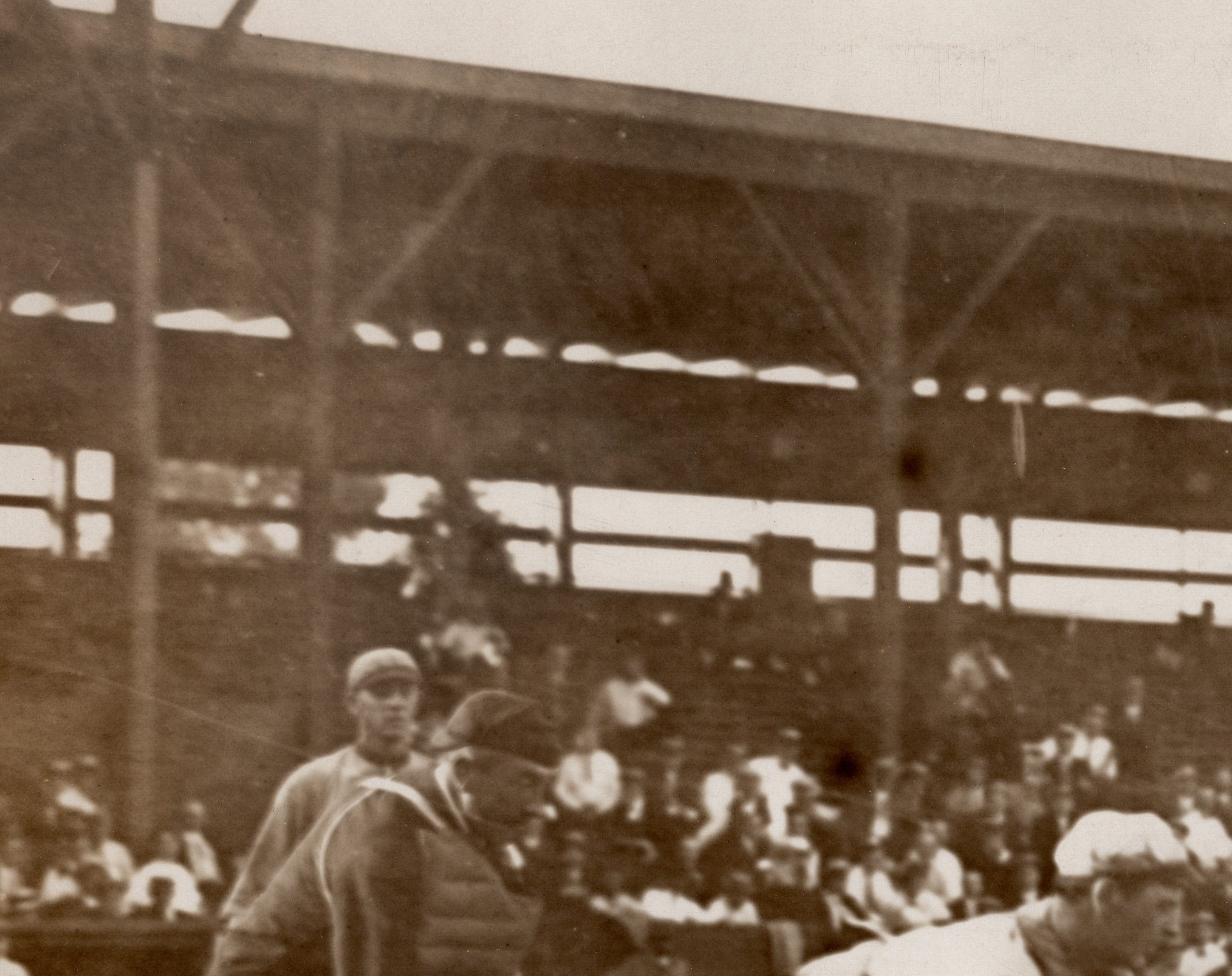
Below, the grandstand portion of the 1910 Speaker photograph analysis.
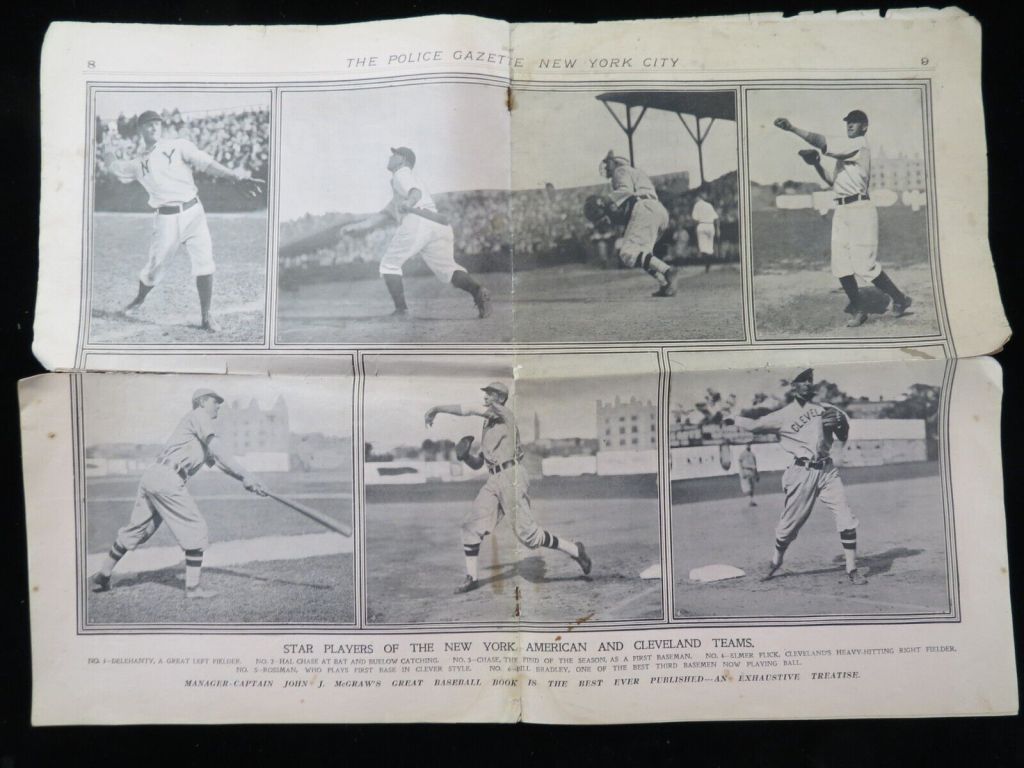
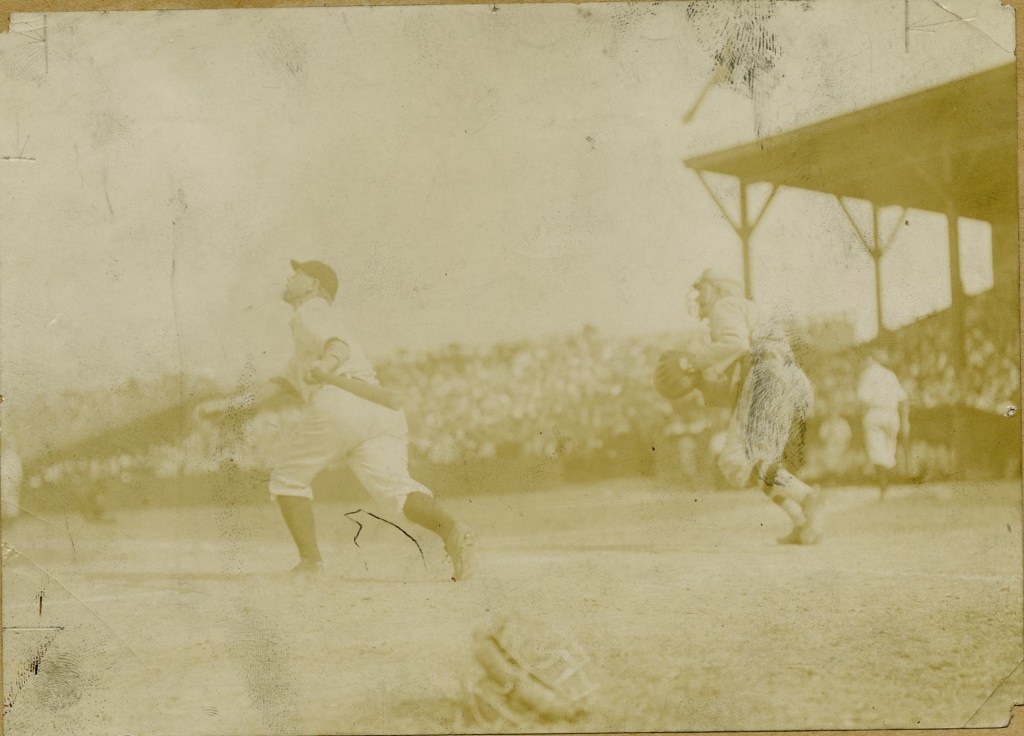
Below, note that the “bump-out” is not present in this 1910 Thaddeus Wilkerson RPPC, courtesy of Robert Edward Auctions.

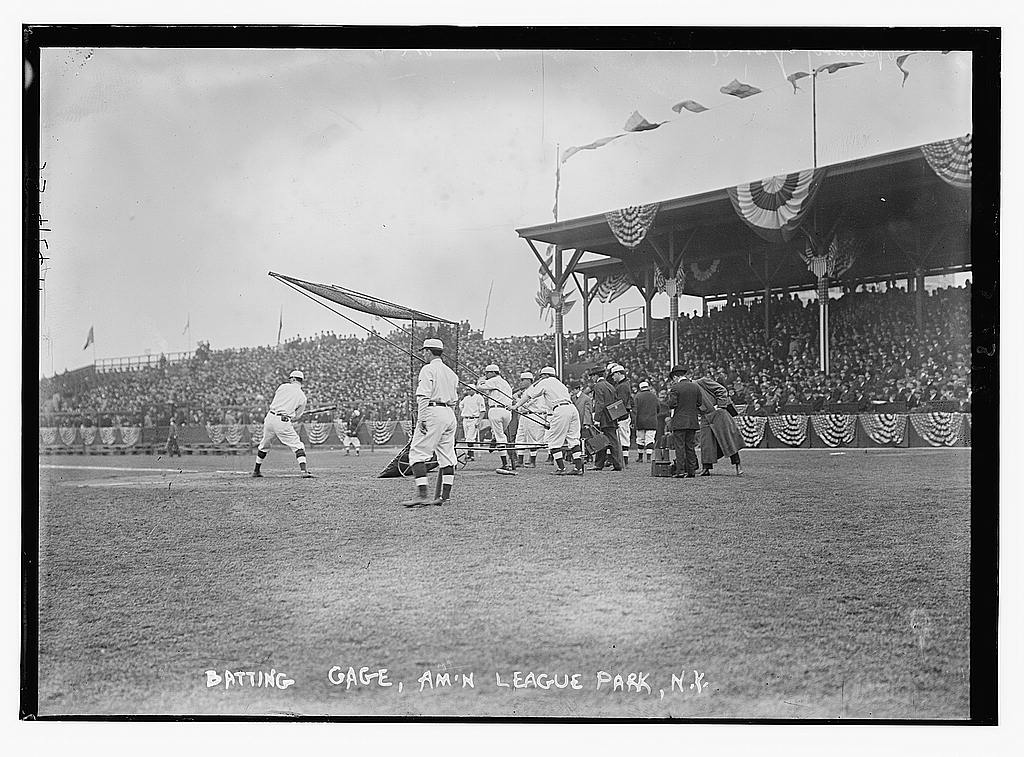
Compare the Wilkerson RPPC 3rd baseline grandstand and stands to the next set of images. (First three images courtesy of The Library of Congress)
The 3rd baseline stands- additional covering progression.
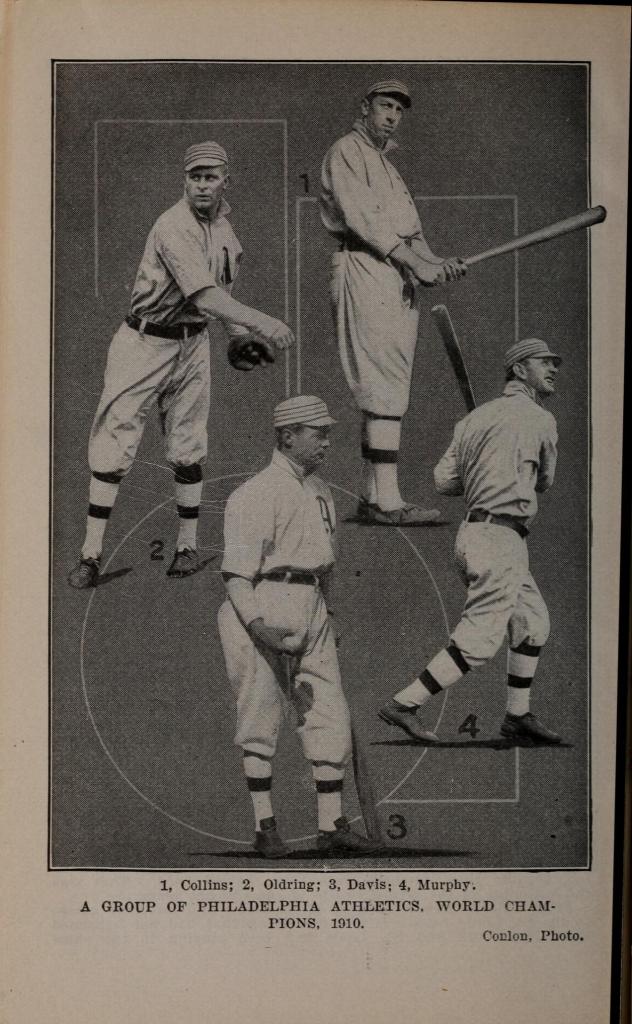
The Rube Oldring photograph by Charles Conlon shows additional covered 3rd baseline grandstand, making the case that the covering construction occured during the 1910 season.
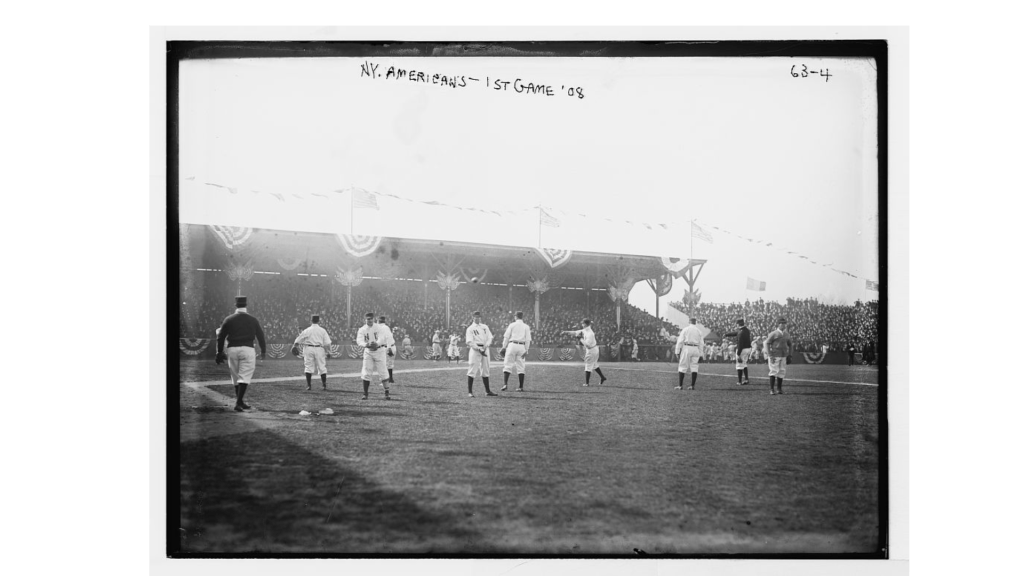
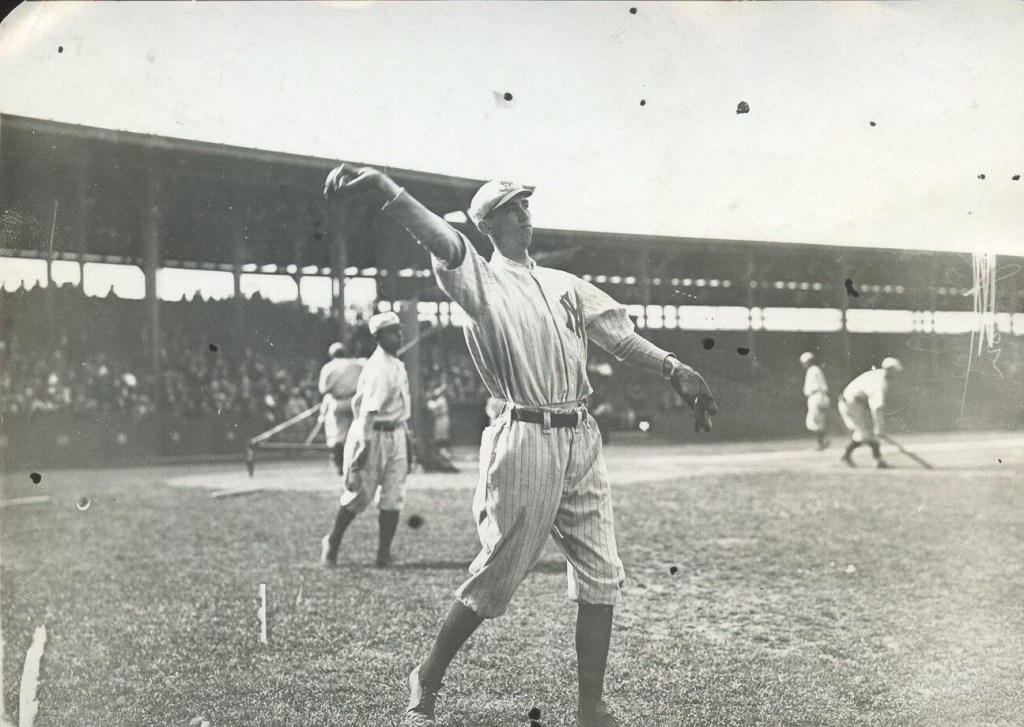
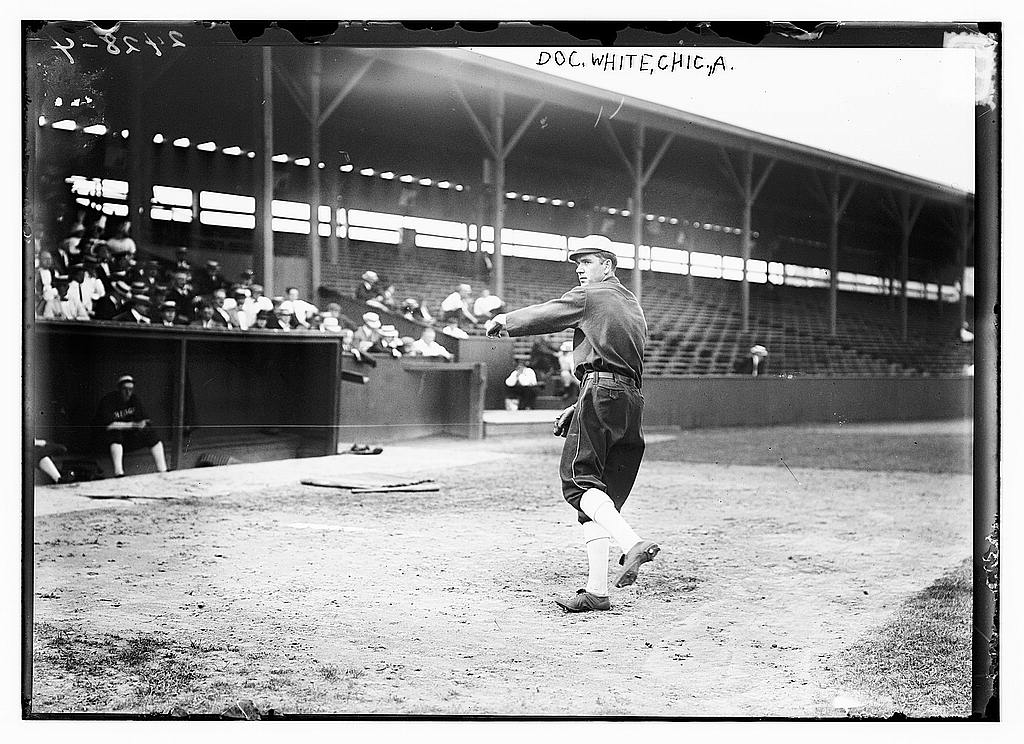
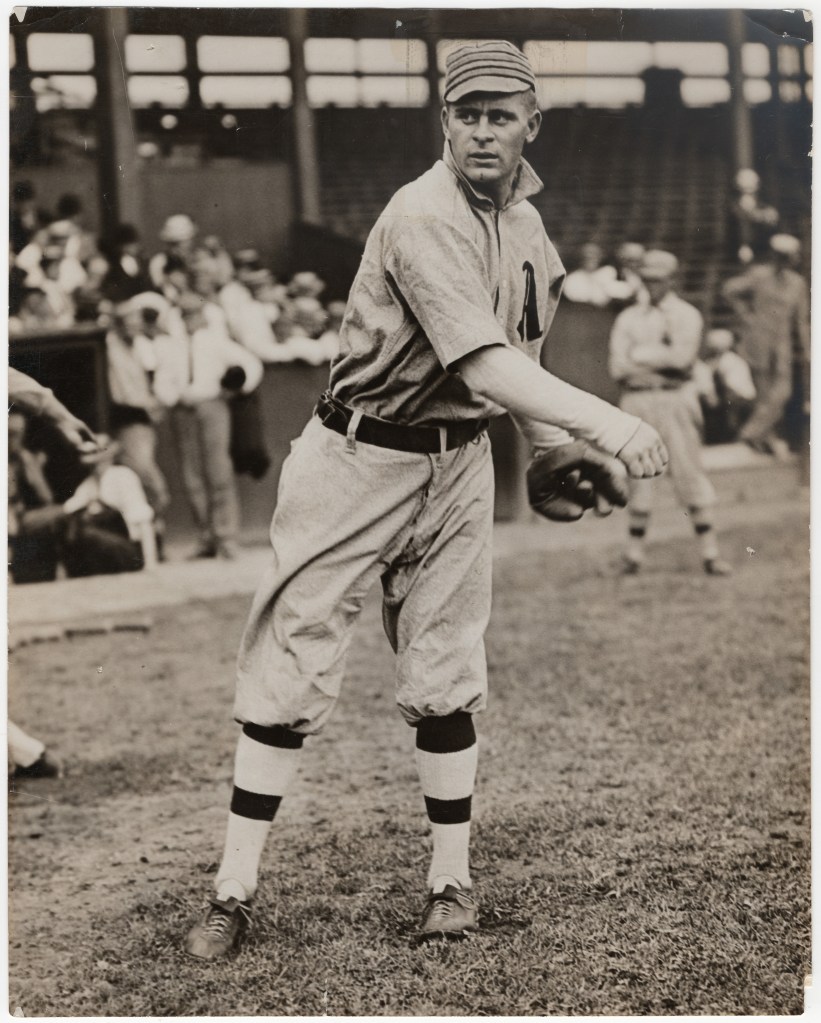
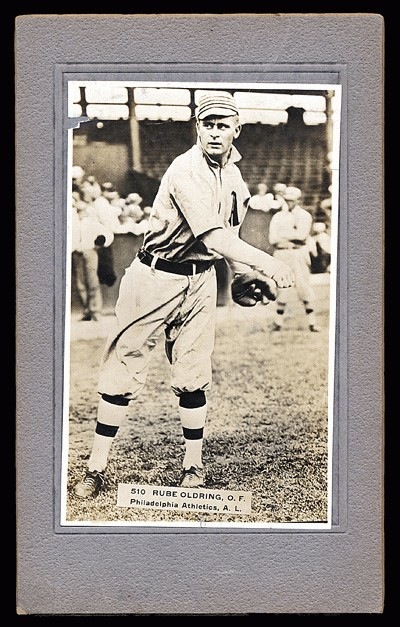

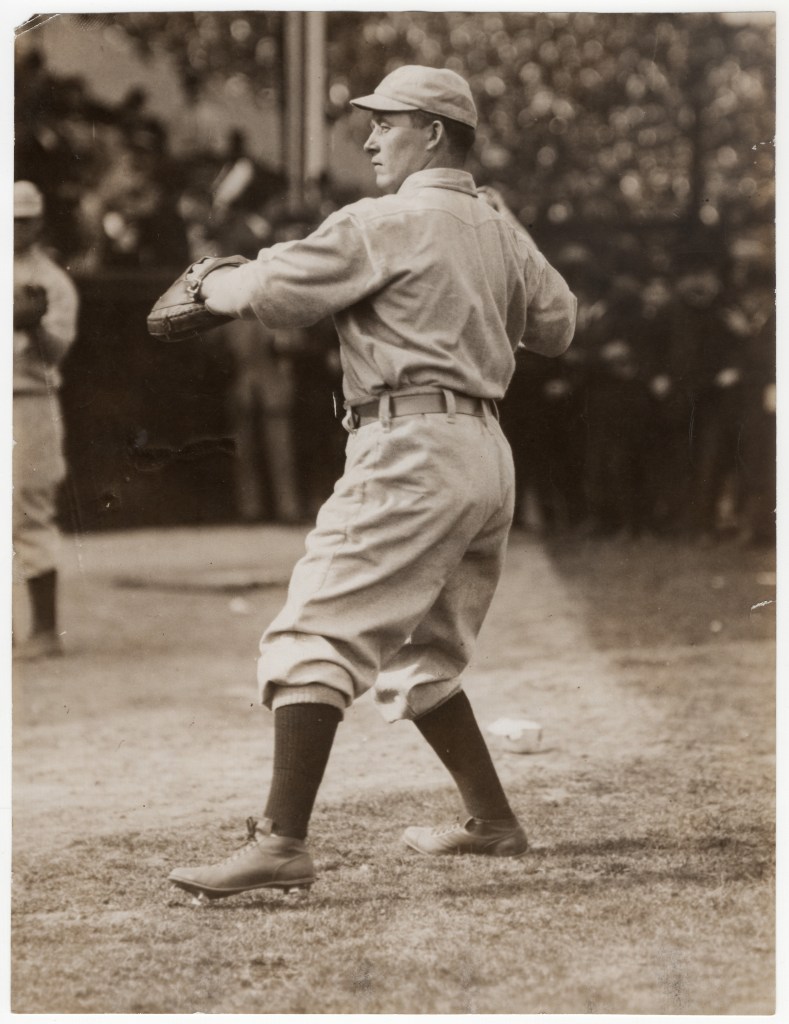
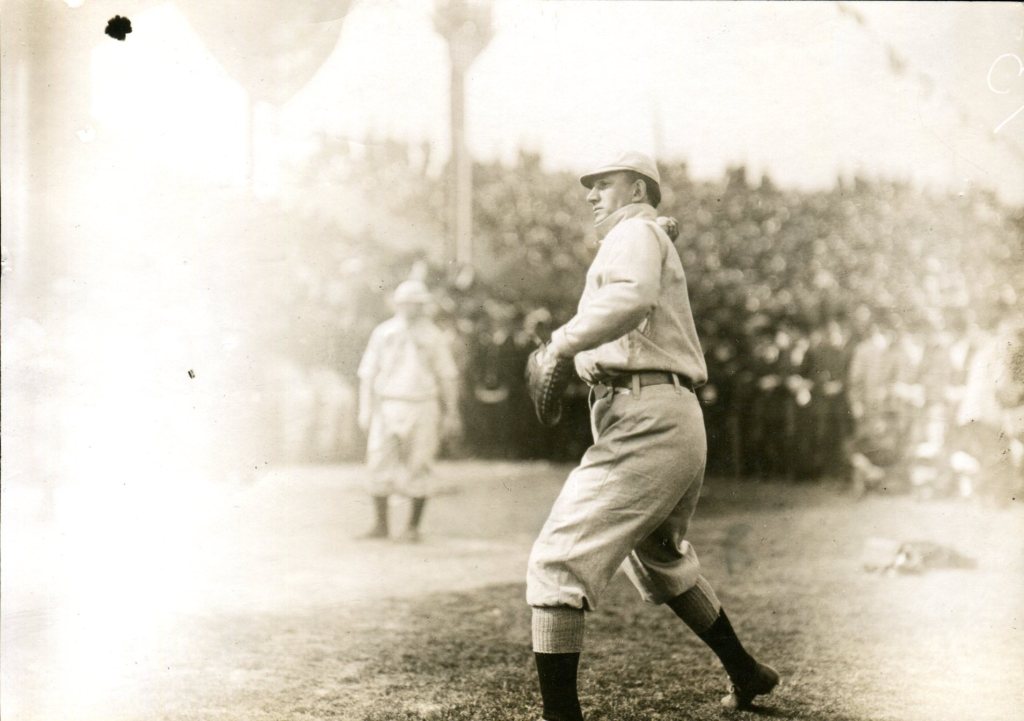
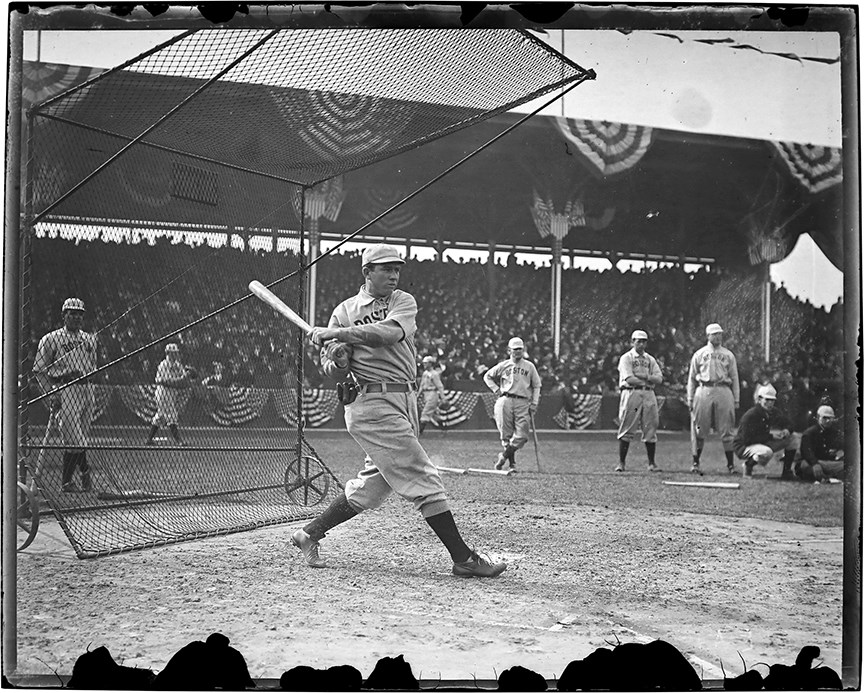
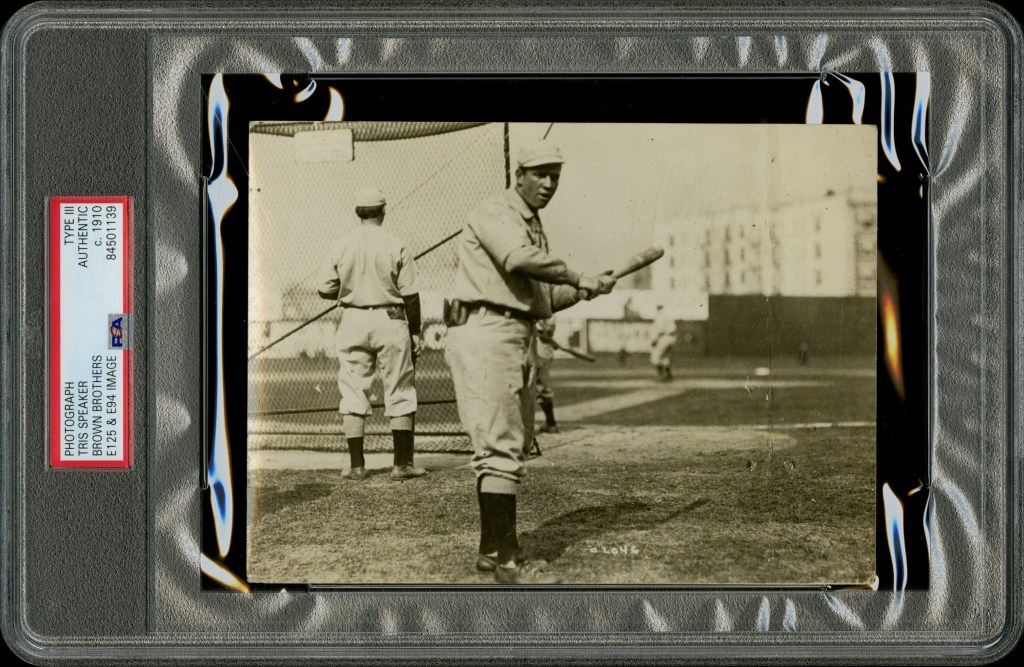
Since the covered extension along the third baseline stands is not present in the 1910 Wilkerson RPPC, we can safely assume that the grandstand covered extension was constructed when the first baseline grandstand cover bump-out was constructed, for the 1911 season. However, there is significant photographic evidence to suggest that the 3rd baseline grandstand cover construction was conducted during the 1910 season. The opening game of the 1910 season slated the visiting Boston Red Sox hosted by New York, with a staggering 25,000 fans in attendance, compared to between 10,000 and 15,000 viewers for the remainder of the series. The following set of photographs show pre-game scenes from that opening game, note the bunting covering the grandstand. Both batting photographs of Speaker also were taken on the same day- Opening Day at Hilltop. The E125 image of Speaker was confirmed to be from 1910, which was previously cited.
The 5th photo shows visiting Nap Lajoie warming up (courtesy of The Detroit Public Library) later in the season, confirmed by the single year (1910) uniform of the Highlanders’ behind the cage.


 Gumshoe_Baseball
